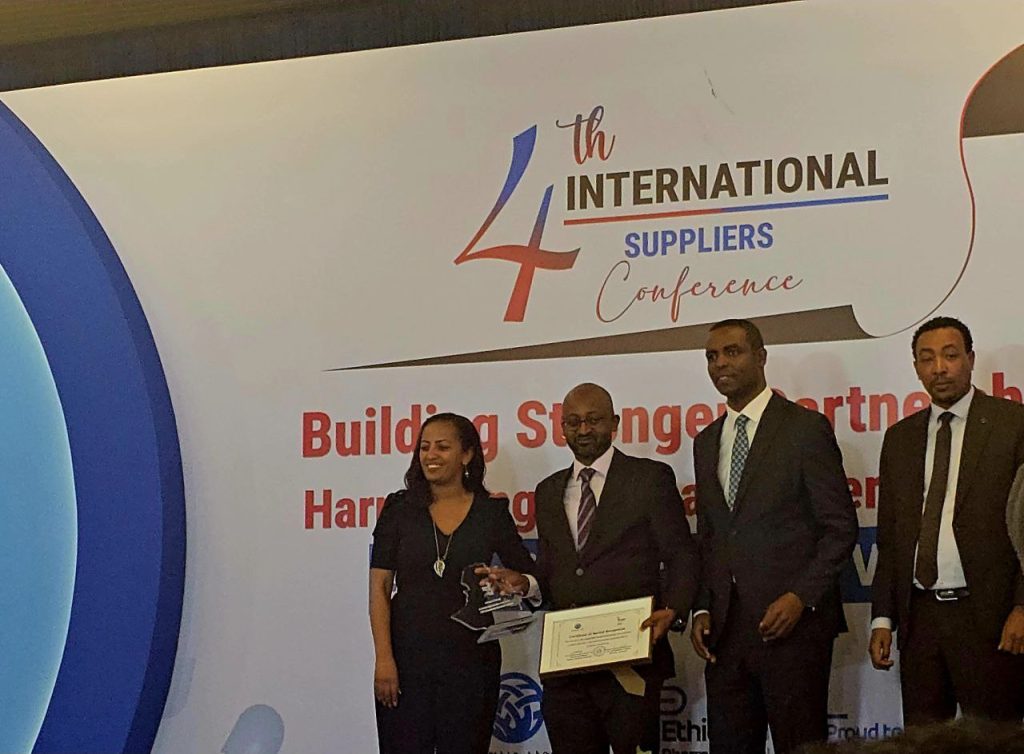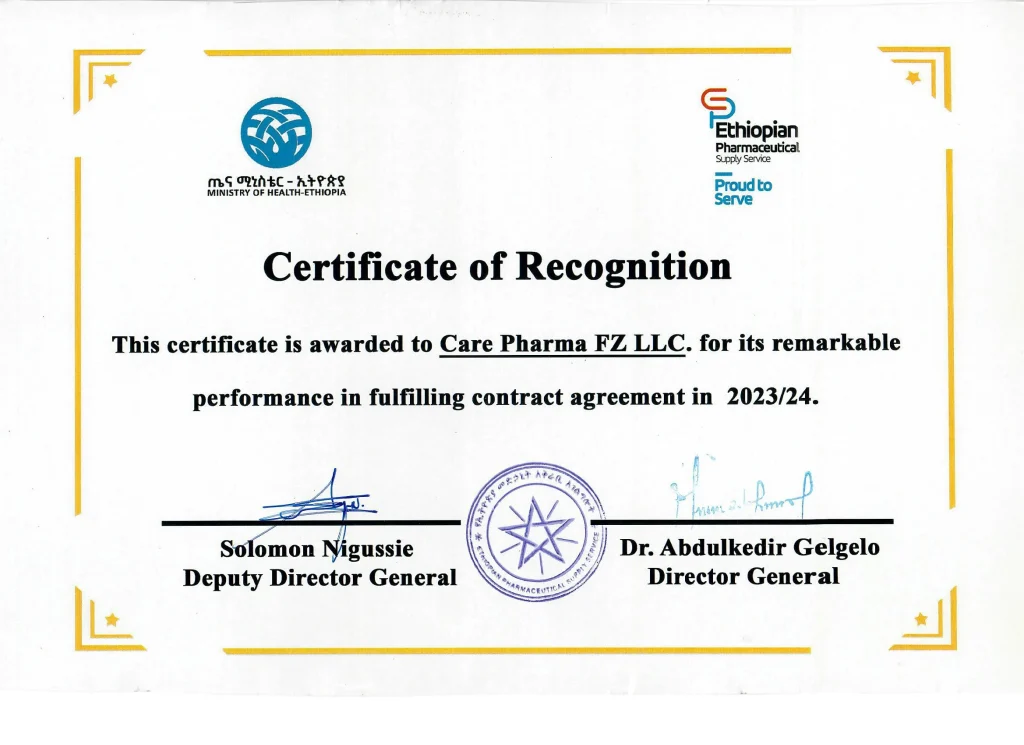

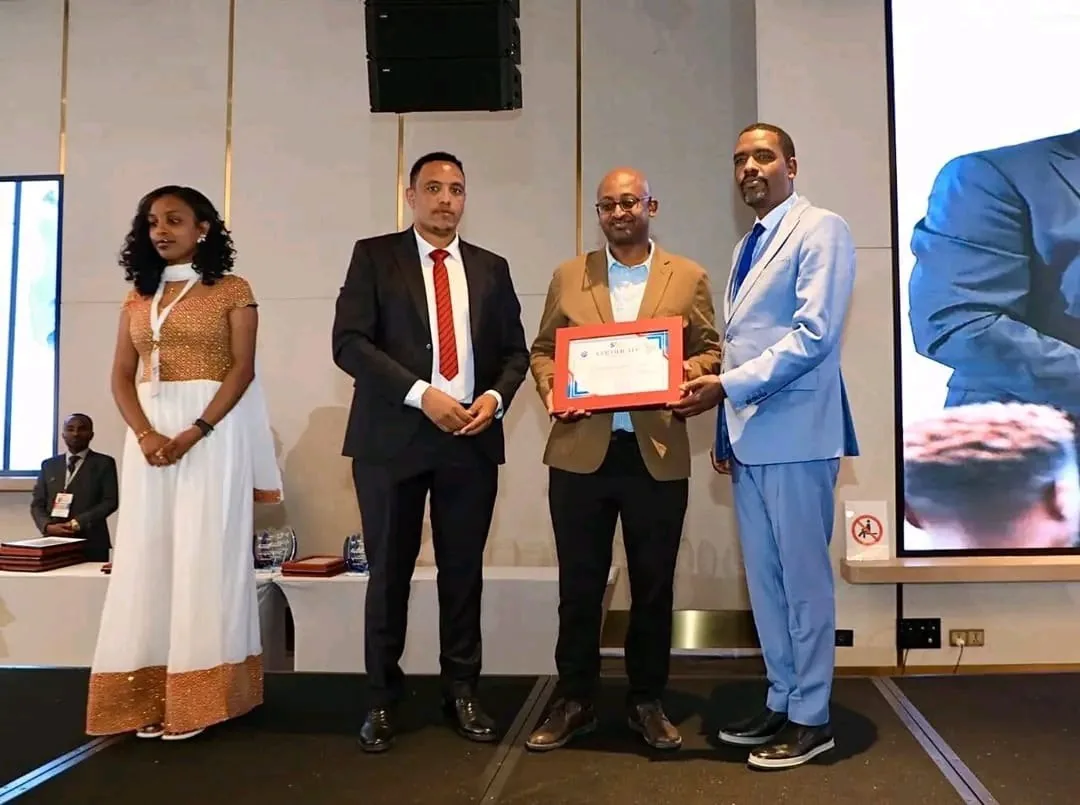
On Tuesday 28 April 2026, the Ethiopian Pharmaceuticals Supply Service (EPSS) filled a ballroom at the Ethiopian Skylight Hotel in Addis Ababa with the companies that keep Ethiopia’s public health system stocked. The occasion was the 5th International Suppliers Conference. Partway through the programme, EPSS stopped the agenda and ran a Performance Recognition Ceremony for the suppliers and manufacturers whose delivery record over the previous year had held up. LifeCare Pharmaceutical Trading was one of the companies called to the stage, and received a certificate of recognition.
Award photos are easy to scroll past. The reason this one is worth reading about is that EPSS does not hand out recognition for goodwill. It hands it out against a performance report, and that report is now the closest thing Ethiopia has to a public scorecard of who can actually deliver medicine on contract. If you supply this market, or you are trying to enter it, the conference told you a good deal about what the buyer now wants.
What the 5th International Suppliers Conference was for
EPSS ran the conference under the theme “Fostering Global Strategic Partnerships for a Resilient Pharmaceutical Supply Chain.” It is the fifth edition of a forum EPSS uses to put international manufacturers, local producers and its own procurement leadership in one room, and it has become the main annual point of contact between the agency and the companies bidding into its tenders.
The programme covered four things:
- Regulatory navigation. A briefing on Ethiopia’s evolving regulatory environment, aimed at suppliers who have to get product registered before they can sell it.
- Incentives. What EPSS is prepared to offer suppliers who move to sustainable, technology-driven supply models rather than one-off shipments.
- The Annual Supplier Performance Report. Unveiled at the conference, with awards to the partners at the top of it.
- B2B matchmaking. Structured time for manufacturers, agents and distributors to sign or progress commitments.
That third item is the one most people underrate. EPSS is not a private buyer that can quietly drop a poor performer. It is the central procurement and distribution arm of the Ethiopian health system, and a supplier who misses a delivery window shows up as a stockout in a health centre several hundred kilometres from Addis Ababa. Publishing a performance ranking and reading it out in front of the whole supplier base is a deliberate piece of pressure.
What the Minister of Health put on the record
The conference was opened by Dr. Mekdes Daba, Ethiopia’s Minister of Health since February 2024. Her remarks tracked four areas: progress in healthcare delivery, local pharmaceutical manufacturing, digital transformation of the supply chain, and health infrastructure. None of those are decorative. Each one has changed how EPSS buys.
On scale, EPSS distributed 68 billion birr worth of pharmaceuticals, roughly 456 million US dollars, and served more than 4,400 hospitals and health institutions under supply contracts. Domestic manufacturers accounted for 41 percent of that supply. Dr. Mekdes described the pharmaceutical supply chain as the “backbone of the health system” (Ethiopian Broadcasting Corporation, October 2025).
On digital transformation, EPSS signed an agreement with Ethio Telecom in September 2025 to run a nationwide digital health supply chain platform with artificial intelligence built into its controls, described by EPSS Director General Dr. Abdulkadir Gelgelo as a way to cut the manual handling out of the chain (Ethiopian Broadcasting Corporation, September 2025). For a supplier, that means documentation, batch data and delivery confirmation stop being paperwork and start being tracked records.
On regulation, the Ethiopian Food and Drug Authority reached WHO Maturity Level 3, the classification for a stable, well-functioning regulator. Skilled birth attendance has passed 64 percent (Fana Broadcasting Corporate, August 2026). ML3 matters commercially, not just diplomatically: it raises what EFDA can demand from a dossier, and it makes an Ethiopian registration worth more to a manufacturer looking at the wider region.
Recognition is a procurement signal, not a trophy
EPSS has spent several years rebuilding its own operation, and it now measures itself hard enough that it can measure its suppliers the same way. The agency won the Grand Prize at the 2024 Global Health Supply Chain Summit in Lagos on the back of numbers it published: inventory accuracy from 90 percent to 99.8 percent, proof of delivery from 89 percent to 98 percent, wastage from 1.8 percent to under 0.8 percent, distribution costs from 0.9 percent to 0.5 percent, and order processing lead times cut from six days to eight hours at some facilities (Capital Newspaper, December 2024).
An agency that has taken its own order processing down to eight hours has very little patience for a supplier who is three weeks late with a shipment and vague about why. The recognition list is the visible end of that. Cipla, which received an award at the same conference, stated publicly that it was ranked second best supplier out of 127 global companies evaluated. Whatever the exact methodology, that figure gives a sense of the pool: this is a competitive field, and most of it goes home without a certificate.
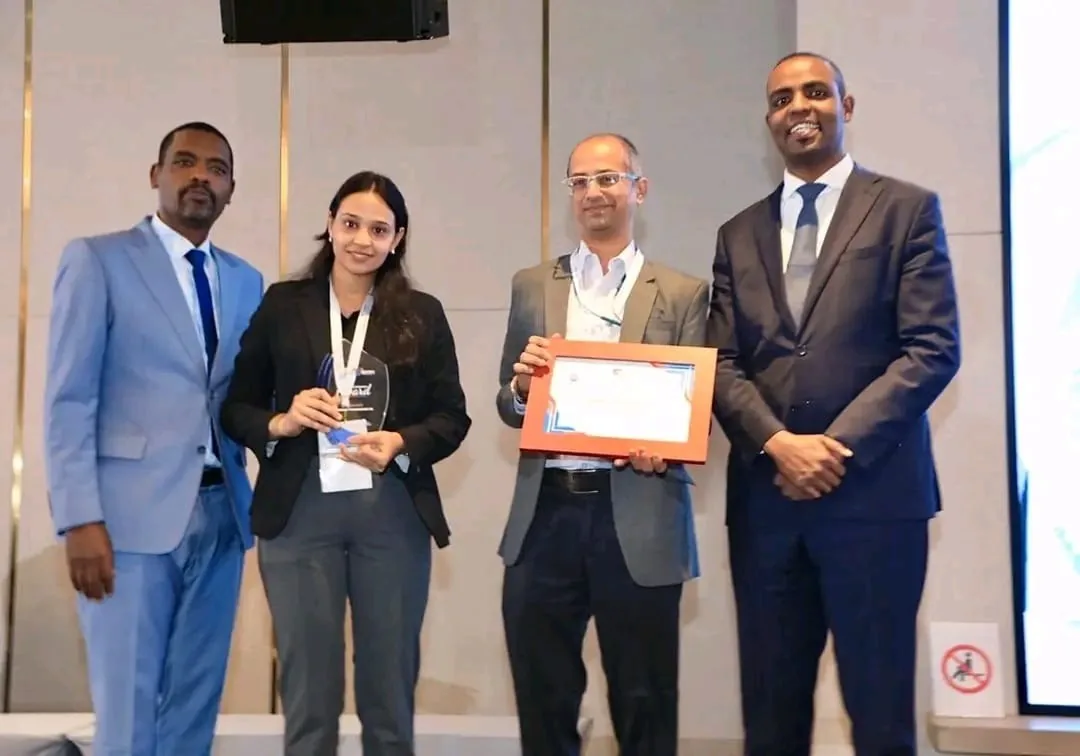
For LifeCare, the 2026 certificate continues a run. The company has been named an EPSS Top-20 Supplier in 2022, 2023, 2024 and 2025, and took the Special Award for Bulk Order Execution at the 4th International Suppliers Conference in February 2025. We have written before about what that relationship with EPSS is actually built on, and the short version has not changed: contract fulfilment, on time, at the quantities agreed, with the documentation that lets EPSS accept the consignment without argument.
EPSS is buying differently, and local production is why
The clearest shift running through the conference is the push to buy Ethiopian. EPSS has been working to source roughly 97 pharmaceutical items domestically, close to half of the 200 or so items it currently imports. To make that viable against a hard currency shortage, a Ministry of Finance circular now allows local manufacturers to quote up to 55 percent of their price in foreign currency, so they can pay for imported inputs without being squeezed out on price (The Reporter Ethiopia).
The market behind that policy is growing fast. Ethiopia’s pharmaceutical market is valued at about 1.8 billion US dollars and is projected to reach 3.6 billion by 2030 at roughly 15 percent annual growth. Tadesse Teferi, President of the Ethiopian Pharmaceuticals and Medical Supplies Manufacturers Association, has framed that as an export opportunity under AfCFTA rather than a purely domestic one (Ethiopian Business Review, 2026). The same argument ran through the 10th Ethio Health exhibition three weeks before the EPSS conference.
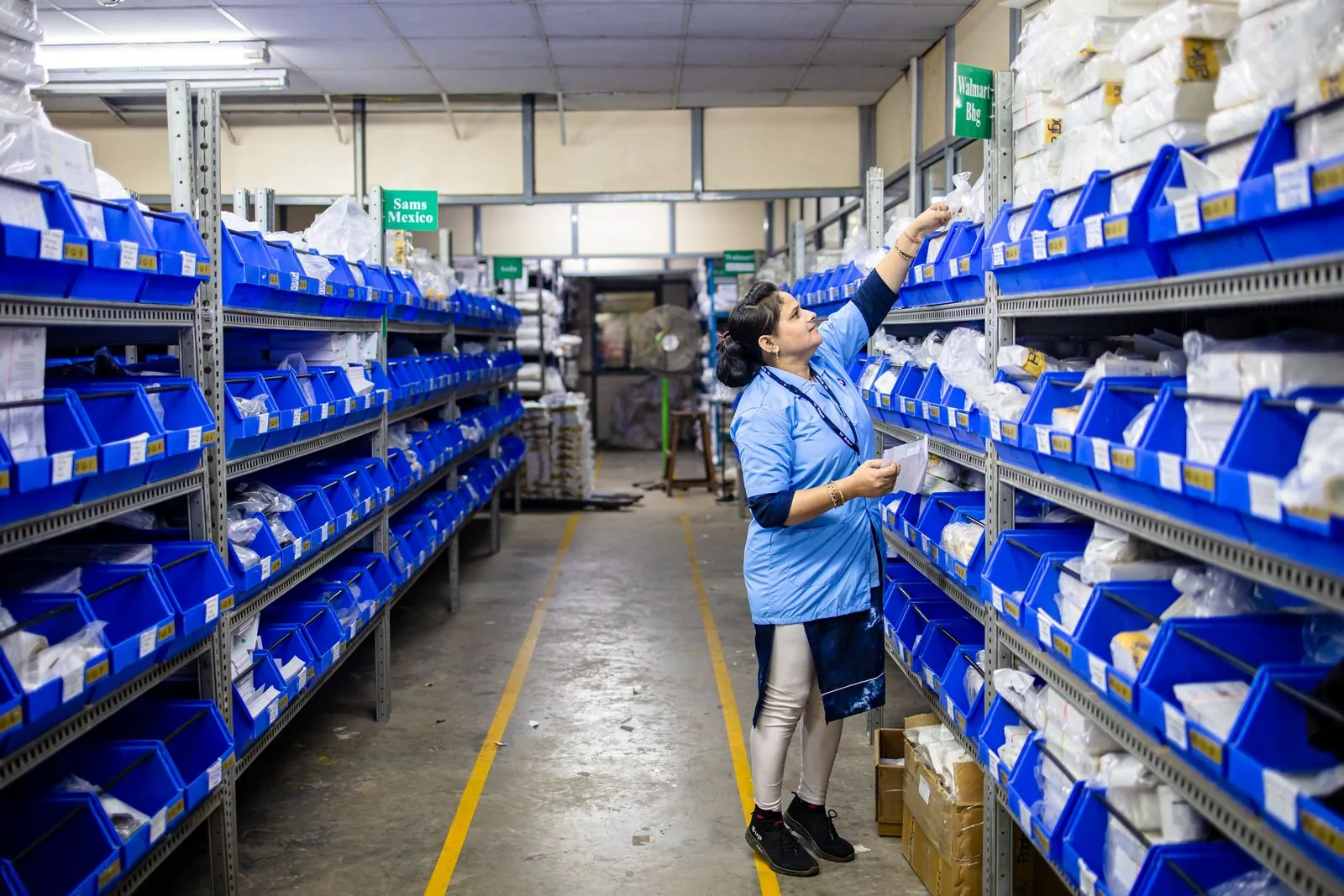
For an importer, this is not a threat to be argued with. It is a description of where the contracts are going. It is also the reason LifeCare runs a manufacturing facility in Gulele Sub City producing hand sanitizer, gauze bandages, glycerine and denatured alcohol, all of which used to arrive in Ethiopia by container. That argument is set out in full in our piece on why local manufacturing is the future of Ethiopian healthcare.
What this means if you manufacture outside Ethiopia
Foreign manufacturers who attended looking for a route into EPSS tenders tend to focus on price and forget the two things that actually decide whether they can bid at all.
The first is registration. EFDA registers products item by item, not companies, and a marketing authorization runs for five years with a renewal that has to be filed inside a 180-day window before it expires. Miss that window twice and the authorization is treated as revoked, which means a fresh dossier. We have set out the full sequence in our guide to what EFDA product registration takes.
The second is the local agent, and this is where manufacturers get caught. Under EFDA’s rules the agency agreement is not a mailing address arrangement. It must name the local agent as responsible for collecting product from the market if there is a recall, it must carry a post-market risk management plan, and the agent handling renewals is expected to be a pharmacist holding a valid EFDA competence certificate. Whoever signs that agreement is carrying real liability on your behalf, which is a good reason to look at who you are appointing rather than who quotes the lowest agency fee.
The third, if you clear the first two, is the tender itself. EPSS procures through international competitive bidding on the government e-procurement system, and the process from prequalification to award has its own rhythm. Our walkthrough of how to become an EPSS supplier covers it, and our note on EFDA and pharmaceutical tenders in Ethiopia covers the documentation side.
What it means if you buy medicine in Ethiopia
Hospital pharmacy committees, private chains and wholesalers can use the EPSS performance list the same way EPSS does, as a filter. A supplier who has been evaluated against public delivery contracts and has come out at the top of that list has already been tested on the things a private buyer usually has to discover the hard way: whether the cold chain held, whether the batch documentation was complete, whether the quantity that arrived matched the quantity on the contract.
It is not a substitute for your own checks. Confirm the product’s EFDA registration in the public eRIS registry rather than taking a company’s word for it, and confirm the supplier’s competence certificate is current. Our checklist on how to verify a medicine supplier in Ethiopia runs through the checks in order, and if you are buying anything temperature sensitive, read it alongside our guide to the pharmaceutical cold chain in Ethiopia.
Questions about the EPSS International Suppliers Conference
When and where was the 5th EPSS International Suppliers Conference held?
The Ethiopian Pharmaceuticals Supply Service held the 5th International Suppliers Conference on Tuesday 28 April 2026 at the Ethiopian Skylight Hotel in Addis Ababa, under the theme “Fostering Global Strategic Partnerships for a Resilient Pharmaceutical Supply Chain.” It was officially opened by Dr. Mekdes Daba, Ethiopia’s Minister of Health. The previous edition, the 4th International Suppliers Conference, was held in February 2025.
What is the EPSS Performance Recognition Ceremony?
It is a segment held during the International Suppliers Conference in which EPSS honours top-performing suppliers and manufacturers for their contributions, reliability and performance in supporting Ethiopia’s pharmaceutical supply system. It is tied to the EPSS Annual Supplier Performance Report, which the agency unveils at the same conference. LifeCare Pharmaceutical Trading received a certificate of recognition at the 2026 ceremony.
How does EPSS decide which suppliers to recognise?
Recognition follows from the annual supplier performance evaluation rather than from a nomination process. EPSS assesses partners on their record against awarded contracts, which in practice means delivery against agreed quantities and timelines, product quality and regulatory documentation, and responsiveness across the life of the contract. EPSS publishes the resulting report at the International Suppliers Conference and gives awards to the partners at the top of it.
Can a foreign manufacturer sell to EPSS without a local agent?
In practice, no. Before a product can be supplied in Ethiopia it must hold an EFDA marketing authorization, and a foreign manufacturer obtains one through a locally established agent who signs an agency agreement lodged with EFDA. That agreement makes the agent responsible for market recall, pharmacovigilance and post-marketing follow-up alongside the manufacturer, and the agent processing registrations and renewals is expected to be a pharmacist with a valid EFDA competence certificate and trading licence.
Is EPSS favouring local manufacturers over importers?
EPSS is actively increasing the domestic share of what it buys. Domestic manufacturers already supplied 41 percent of its distributed volume as of October 2025, the agency has been working to source around 97 pharmaceutical items locally out of roughly 200 it imports, and a Ministry of Finance circular lets local manufacturers quote up to 55 percent of their price in foreign currency so they can cover imported inputs. Imports remain essential for everything Ethiopia cannot yet make, but the direction of travel favours suppliers with local production or a serious local presence.
Working with a supplier EPSS has already evaluated
LifeCare has supplied EPSS through open tender for years, has been named a Top-20 Supplier four years running, and left the 5th International Suppliers Conference with a certificate of recognition. We also manufacture in Addis Ababa, which is the part of the market EPSS is deliberately growing. If you manufacture abroad and need a local agent who will carry the registration file and the recall obligation rather than forward your email, look at how we work with our partners. If you are buying pharmaceuticals, medical supplies and disposables or medical equipment in Ethiopia, tell us what you need and when you need it.