
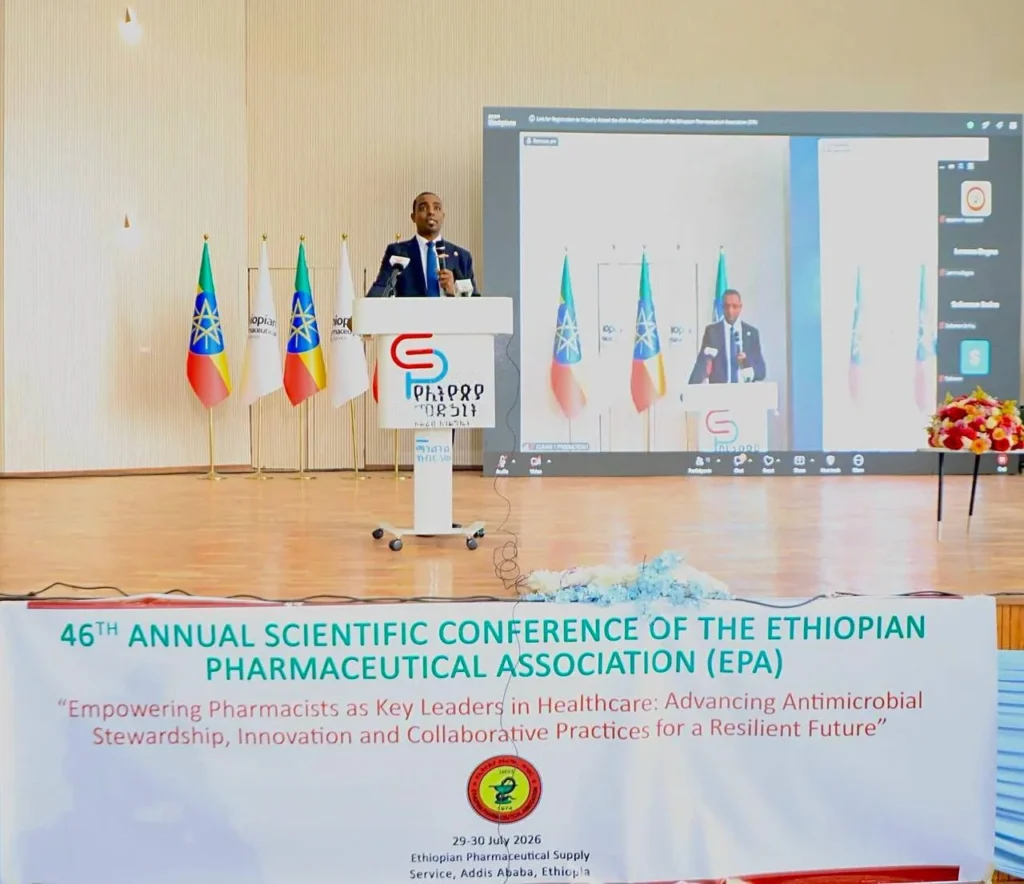
On 29 and 30 July 2026, pharmacists, researchers, regulators and suppliers filled the conference hall at the headquarters of the Ethiopian Pharmaceutical Supply Service (EPSS) in Addis Ababa for the 46th Annual Scientific Conference and General Assembly of the Ethiopian Pharmaceutical Association (EPA). LifeCare Pharmaceuticals Trading was there as a sponsor and an exhibitor. The theme EPA chose should concern anyone who supplies medicine in Ethiopia.
The theme: pharmacists as clinical leaders, not just dispensers
The banner across the front of the hall set the agenda: “Empowering Pharmacists as Key Leaders in Healthcare: Advancing Antimicrobial Stewardship, Innovation and Collaborative Practices for a Resilient Future.” EPA used the two days to argue that the pharmacist belongs in clinical decisions about which antimicrobial is used and for how long, rather than at the end of the process filling an order someone else wrote.

EPA has been making this case for a while. The association was established in 1974 and marked its 50-year journey in 2024, an occasion at which the World Health Organization received a Certificate of Merit for its work strengthening Ethiopia’s regulatory systems and supporting local pharmaceutical production (WHO Regional Office for Africa, December 2024). The 46th conference continued that line of argument with a sharper clinical focus.
What was on the two-day programme
EPA structured the programme around policy-focused and theme-driven presentations, continuing medical education sessions, and a dedicated block for scientific papers, followed by the association’s business meeting and General Assembly. In its call for abstracts, EPA set out six CME sessions and at least twelve scientific papers, all delivered as oral presentations, with abstracts capped at 250 words and submissions closing on 5 June 2026.
The panel discussions ran along four lines:
- Pharmacists in antimicrobial stewardship, and how far their mandate should extend inside hospitals.
- Current pharmacy practice and patient outcomes, including what changes at the bedside.
- Cross-professional teamwork between pharmacy, medicine, nursing and laboratory services.
- Professional development and the future of pharmacy education in Ethiopia.
EPA also ran the conference as a hybrid event, publishing a registration link so members who could not travel to Addis Ababa could attend the sessions remotely. Judging by the Zoom window projected beside the podium for most of the programme, a good number took it up. For members outside Addis Ababa, that was the difference between attending and reading about it afterwards.
Why antimicrobial stewardship is the right theme for 2026
In December 2025, Ethiopia launched its Fourth National Action Plan for the Prevention and Containment of Antimicrobial Resistance, covering 2026 to 2030, at the Africa CDC headquarters in Addis Ababa during World Antimicrobial Resistance Awareness Week (WHO Regional Office for Africa, December 2025). The 46th conference landed in the first year of that plan, so a good deal of the discussion turned on who owns which part of it.
The previous plan left a foundation to build on. Ethiopia established 26 AMR sentinel surveillance sites and put antimicrobial stewardship programmes into 328 health facilities. Set against that, Africa currently carries more than one million AMR-related deaths a year, roughly 21% of the global toll, and on current trends that figure is projected to reach 4.1 million a year by 2050 (Africa CDC, December 2025).
What stewardship asks of the supply chain
Most stewardship conversations focus on prescribing. A stewardship programme tells a clinician to use a narrow-spectrum agent first and to reserve the broader ones for cases that need them. When the narrow-spectrum agent is out of stock that week, the clinician reaches for whatever is on the shelf, and nobody follows the protocol. Stewardship depends on supply as much as on prescribing.
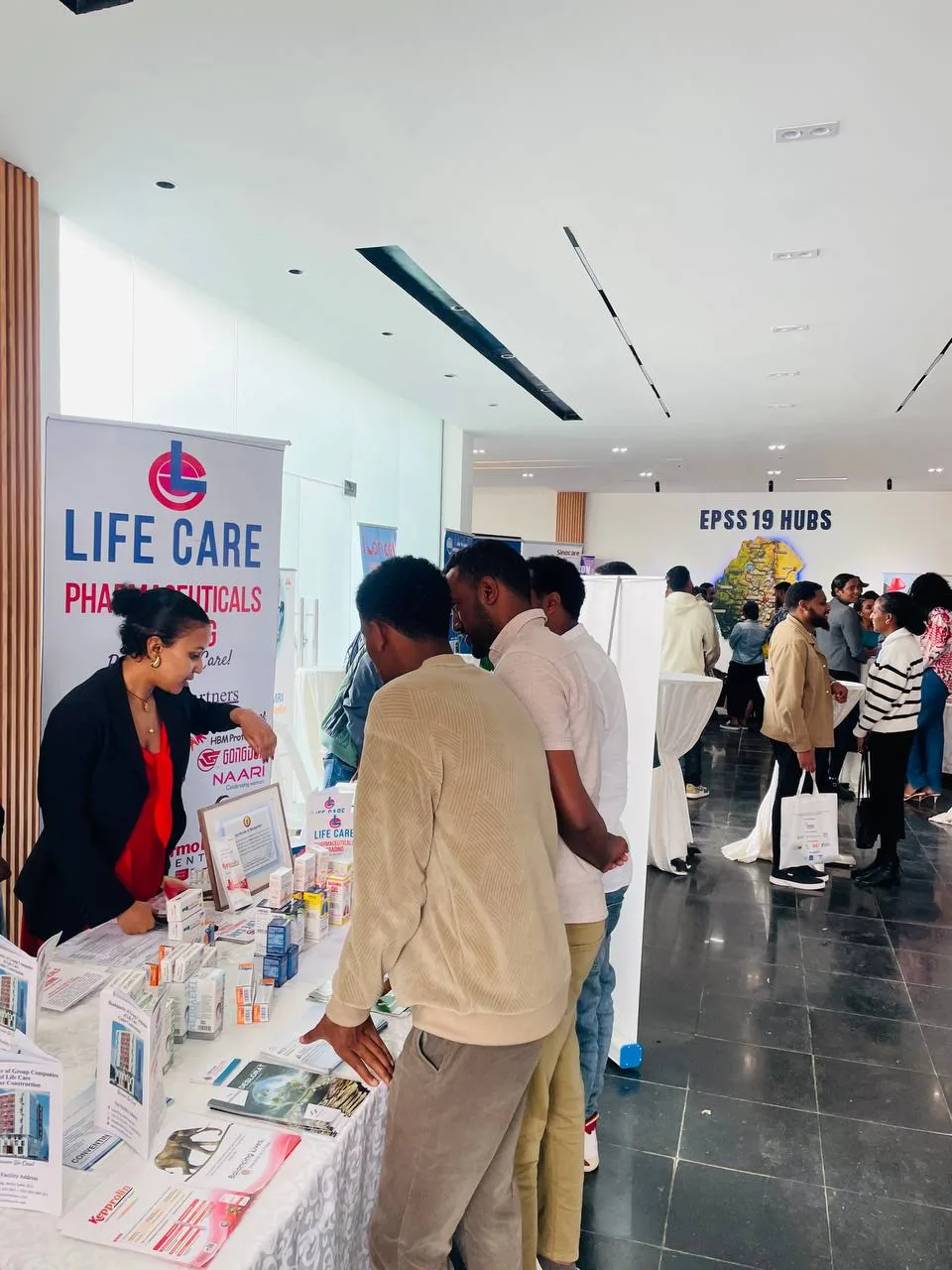
The venue made the point on its own. A wall display in the exhibition area mapped the EPSS hub network across the country, and EPSS reports serving more than 4,000 health facilities through it (EPSS). Whatever stewardship protocol gets agreed in that hall still has to reach the far end of that network before a patient notices any difference. Three things have to hold for it to work:
- Continuity on the unglamorous molecules. Access-group antibiotics are cheap and low-margin, which is why they go short. Stewardship depends on the boring lines being there every month.
- Product you can trust. A substandard antibiotic delivers a sub-therapeutic dose, which is a textbook route to resistance. Provenance and registration status stop being paperwork and start being clinical.
- Forecasting that reaches the supplier. If a hospital changes its empiric therapy protocol, someone has to be holding stock of what the new protocol calls for before the change takes effect.
We have written about the first and second of these before, in our guides to antibiotic supply in Ethiopia and how to verify a medicine supplier. At this conference they came back to us as clinical questions rather than procurement ones.
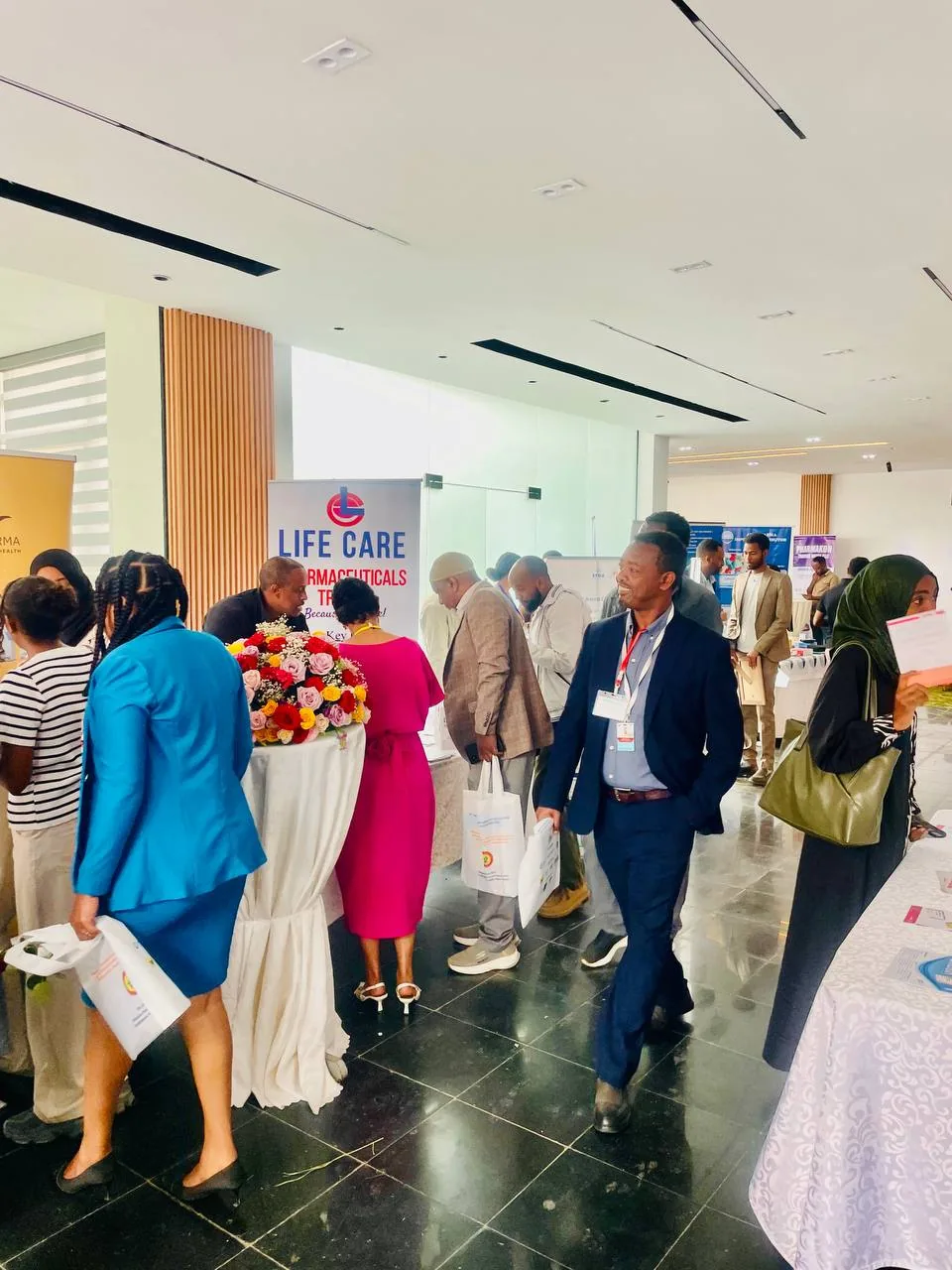
At the LifeCare stand
Our team spent both days in the exhibition area alongside manufacturers, importers and distributors. The conversations were the reason to be there. Hospital pharmacists asked about lead times on specific antibiotic lines. Procurement officers wanted to know which of our products are manufactured locally and which are imported. Younger pharmacists asked, more than once, what a career looks like on the supply side of the profession rather than in a dispensary.
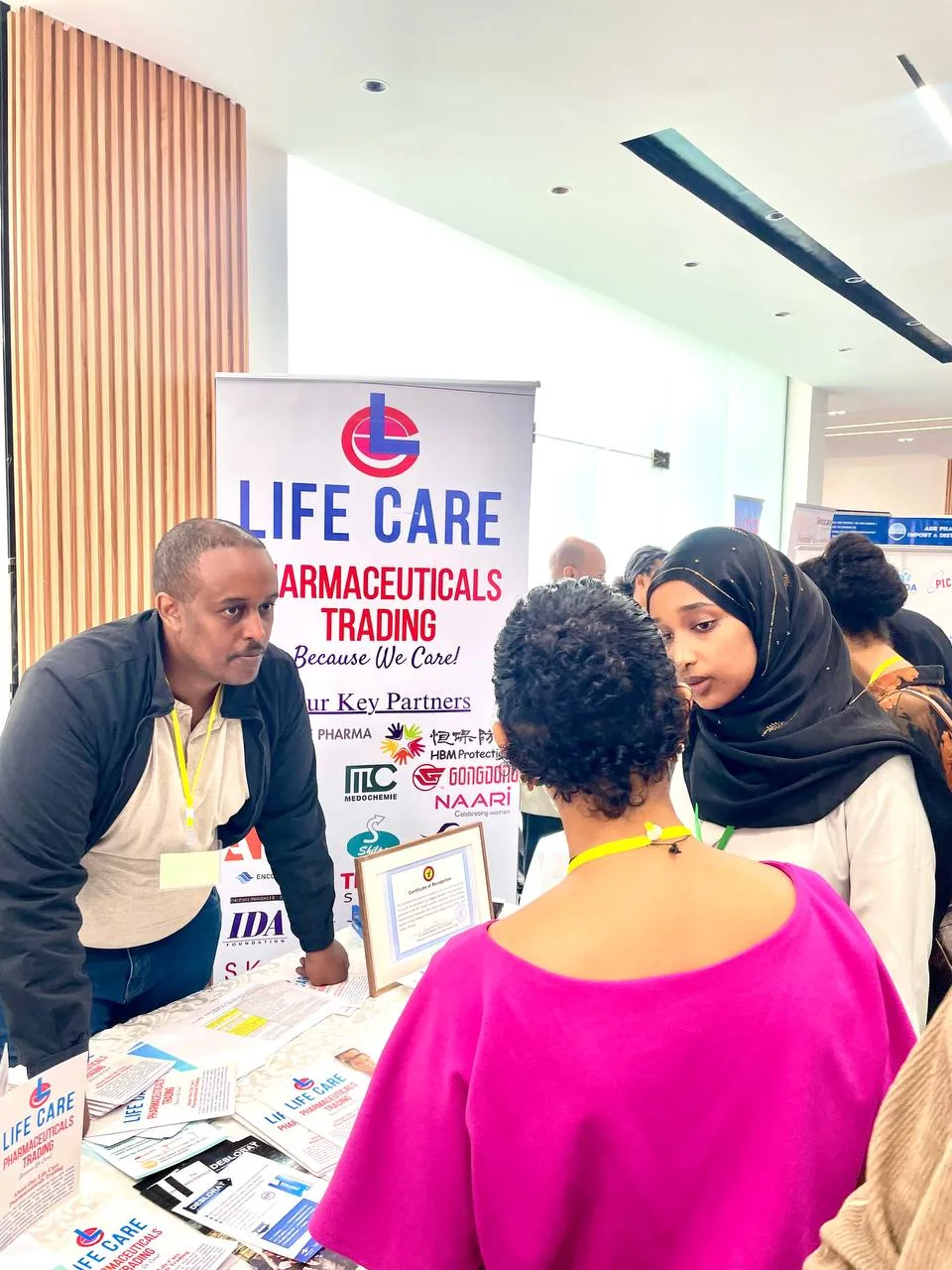
Ethiopia’s pharmacy schools produce graduates who picture themselves in a hospital or a community pharmacy. Few of them have met anyone working in import licensing, regulatory affairs, quality assurance or cold chain, so those careers stay invisible until somebody describes the work. We spent a good part of both days describing it.
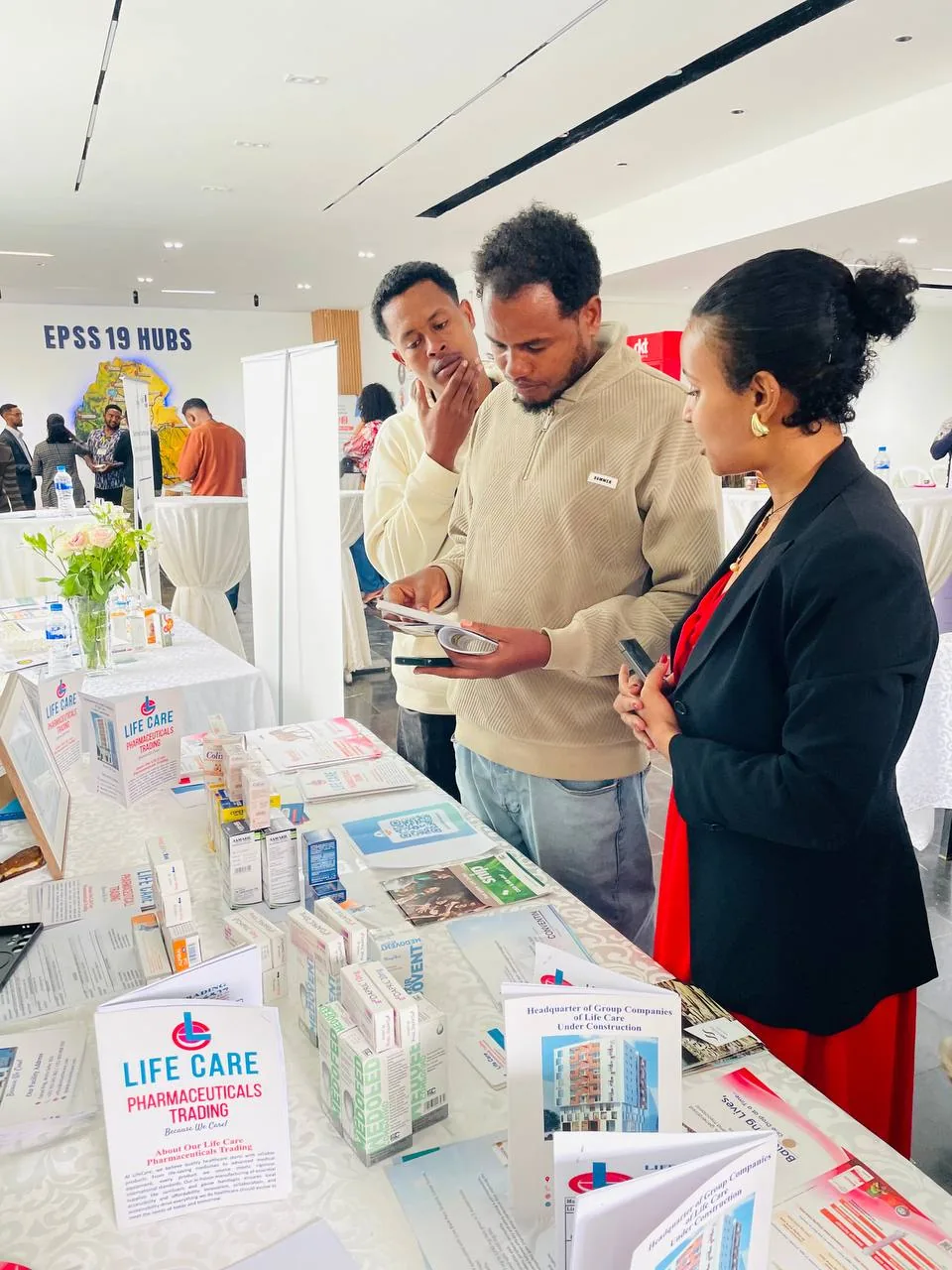
We also showed the locally manufactured side of the business. LifeCare’s Gulele Sub City facility produces hand sanitizer, gauze bandages, glycerine and denatured alcohol, all product lines that were entirely imported into Ethiopia before. With the national policy push toward domestic production, that part of the stand drew steady interest from people who had assumed we were an importer and nothing more.
Recognised as a sponsor of the 46th conference
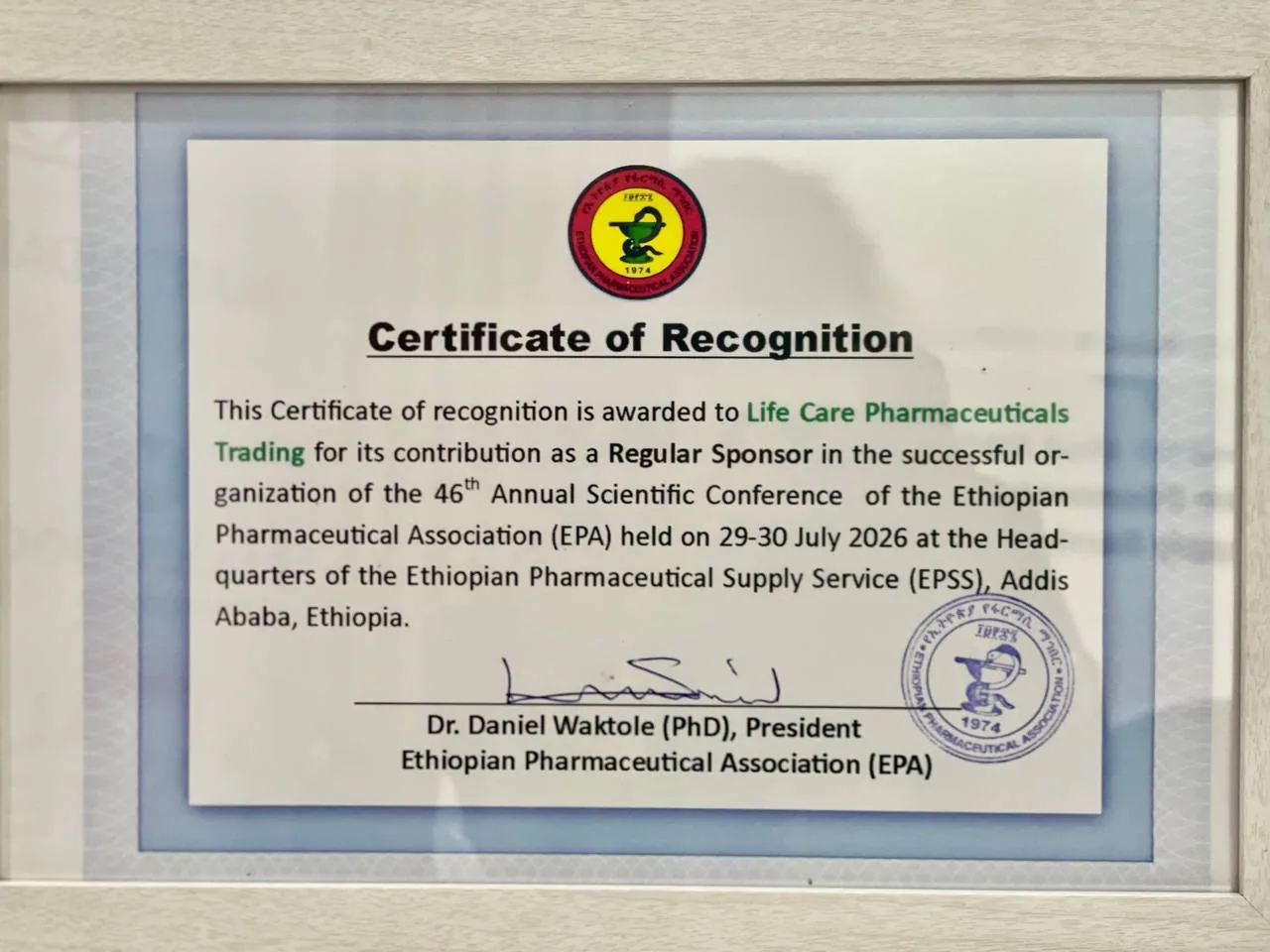
On the second day, EPA recognised its sponsors on stage. LifeCare Pharmaceuticals Trading received a Certificate of Recognition for its contribution as a Regular Sponsor of the 46th Annual Scientific Conference, signed by the association’s President, Dr. Daniel Waktole (PhD).

An association arguing for a bigger clinical role for pharmacists is arguing for better medicine use. We would rather compete in that market than in one where the only question asked of a supplier is the unit price.
A continuing relationship with EPA
This was not our first year. LifeCare previously sponsored the 42nd, 43rd and 44th Annual Conferences of the association, the last of those held on 2 and 3 August 2024 under the theme “The Role of Pharmacists in Strengthening Primary Health Care,” which we covered in our note on supporting the EPA. Showing up for the same association year after year is a slower commitment than a one-off campaign, and more use to them.
The organisations that supply Ethiopian healthcare and the professionals who deliver it need to be in the same room more often than they are. Conferences like this one are where a hospital pharmacist can tell an importer, directly, which product they cannot get hold of. We came away with a short list of those.
Frequently asked questions
When and where was the 46th EPA Annual Scientific Conference held?
It was held on 29 and 30 July 2026 at the conference hall of the Ethiopian Pharmaceutical Supply Service (EPSS) headquarters in Addis Ababa, Ethiopia. EPA also offered virtual attendance for members unable to travel.
What was the theme of the 46th EPA conference?
“Empowering Pharmacists as Key Leaders in Healthcare: Advancing Antimicrobial Stewardship, Innovation and Collaborative Practices for a Resilient Future.”
What is the Ethiopian Pharmaceutical Association?
EPA is the national professional association of pharmacists in Ethiopia, established in 1974. It works on professional advocacy, education and networking, and holds an annual scientific conference and general assembly for its members.
What was LifeCare’s role at the conference?
LifeCare Pharmaceuticals Trading was a Regular Sponsor of the 46th Annual Scientific Conference and exhibited across both days. The company received a Certificate of Recognition from EPA for its sponsorship, and has previously sponsored the association’s 42nd, 43rd and 44th annual conferences.
Why does antimicrobial stewardship matter for pharmaceutical suppliers?
Stewardship protocols direct clinicians toward narrow-spectrum antimicrobials first. Those protocols only hold if the recommended products are reliably in stock and of assured quality, so consistent supply of Access-group antibiotics and verified product provenance are part of how stewardship succeeds or fails in practice.
Talk to us about antimicrobial supply
If your hospital, health facility or wholesale operation is building out a stewardship programme and needs a supplier who can hold continuity on the lines your protocol depends on, we should talk. You can review our pharmaceuticals range and our medical supplies and disposables, or get in touch directly.